



Can You Tank-Mix Biostimulants with Fertilizers and Pesticides? A Practical Compatibility Guide
Oct.14.2026
Table of Content
[Hide]
Combining products in one spray or fertigation pass can save labor, water, fuel, and application time. It can also create problems that are invisible until the crop is treated. A mixture may precipitate, foam, separate, shift pH, reduce microbial viability, increase crop injury, or weaken the performance of one component.
The answer to 'Can these products be mixed?' is therefore product-specific. It depends on the finished formulations, water source, concentrations, application route, crop stage, and local labels. The word 'biostimulant' by itself does not establish compatibility.
Compatibility Has More Than One Layer
A jar that looks clear only demonstrates that an obvious physical problem was not observed at that moment. A sound tank-mix decision considers at least four layers: physical compatibility (no flakes, gel, sediment, excessive foam, or separation); chemical compatibility (acceptable pH and no damaging reaction); biological compatibility (no unacceptable loss of microbial or bioactive function); and crop and efficacy compatibility (no added phytotoxicity or loss of performance).
There is also a legal layer. Both labels and local registration conditions must permit the proposed use. A technically plausible mixture is not automatically an approved one.
Start with the Formulation Type
Living microbial inoculants require special care because fungicides, disinfectants, oxidizing agents, extreme pH, concentrated salts, or long residence time in the tank may reduce viability. Metabolite-based and non-microbial formulations may be less sensitive to some of those factors, but they can still react with fertilizers, metal ions, emulsifiers, dispersants, or other formulation components.
This is why a mycorrhizal inoculant, an amino-acid formulation, a chitosan product, and a brassinolide-containing formulation should not inherit the same compatibility recommendation. Review the exact label and technical guidance for every finished product in the mixture.
Screen the Risk by Mixing Partner
Mixing Partner | Main Concern | What to Verify | If Evidence Is Missing |
Fertilizer | Salts, electrical conductivity, pH, and precipitation | Label, water quality, concentration, and jar test | Apply separately |
Fungicide | Microbial viability and formulation interaction | Product-specific biological and physical compatibility | Separate living inoculants |
Insecticide | Solvent, surfactant, pH, and crop safety | Both labels and technical guidance | Use separate timing |
Herbicide | Crop response, adjuvants, and selectivity | Registered use, crop stage, and small-area test | Avoid an unverified mix |
Plant growth regulator | Overlapping physiological signals and rate sensitivity | Crop objective, concentration, and timing | Keep programs separate |
Use a Stepwise Compatibility Check
Before a commercial-scale application, use the following sequence:
1. Confirm that the proposed combination and application route are permitted by the current local labels.
2. Identify each formulation type and flag any living microorganism, strong acid or alkali, oxidizer, copper product, concentrated salt, or high-solvent formulation.
3. Use the intended field water. Record pH, hardness, salinity, temperature, and visible sediment where these are relevant.
4. If the manufacturer recommends a jar test, reproduce the planned ratios at small scale. Observe the mixture immediately and again after the expected tank-hold time.
5. Follow the product-specific mixing order and maintain the required agitation. Do not copy a universal order from an unrelated formulation.
6. Apply a small treated area first when crop safety or biological performance has not been demonstrated under local conditions.
7. Record the water source, products, batch numbers, rates, order, weather, crop stage, and result so the decision can be repeated or investigated.
What CHICO's Current Product Directions Show
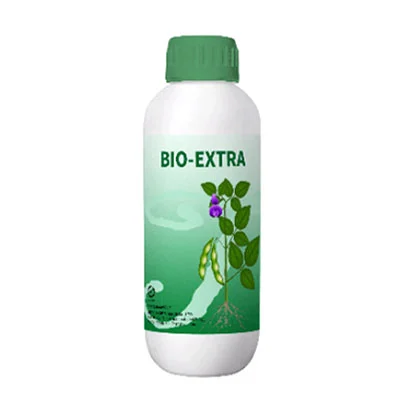
CHICO's current technical pages for CLIMASHIELD® and BIO EXTRA® state that the products can be mixed with most pesticides and fertilizers, while excluding strong acids, strong alkalis, and copper products. Those directions apply to the named finished products; they should not be generalized to every CHICO or third-party biostimulant.
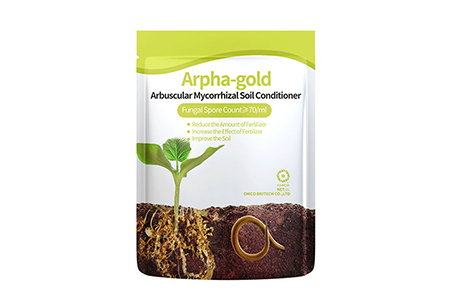
For ARPHA GOLD®, the objective is to establish living AMF in contact with active roots. Its current guidance specifically warns against mixing with copper-based fungicides. Other combinations should also be confirmed before use because a physically stable tank does not prove that propagule viability and colonization will be maintained.
Conclusion
Biostimulants can sometimes be tank-mixed with fertilizers, fungicides, insecticides, and other inputs, but compatibility cannot be assumed from the product category. Start with the exact formulation and label, evaluate the water and partner product, and separate applications whenever evidence is incomplete.
For a proposed CHICO program, contact the technical team with the crop, water source, application route, product names, rates, and planned mixing order before scaling up.
FAQs
Does a successful jar test prove that a tank mix is safe?
No. A jar test can identify obvious physical incompatibility, but it does not prove biological viability, crop safety, efficacy, or legal acceptability.
Should microbial biostimulants be mixed with fungicides?
Only when the specific combination is supported by the label or technical compatibility data. If the interaction is uncertain, separate the applications.
Can water quality change tank-mix performance?
Yes. pH, hardness, salinity, temperature, and dissolved ions can affect solubility, stability, microbial survival, and crop safety. Use the actual field water in any compatibility check.
References
Related Agrochemical Products
SMASH® Emamectin Benzoate 2%+Tolfenpyrad 10% Insecticide
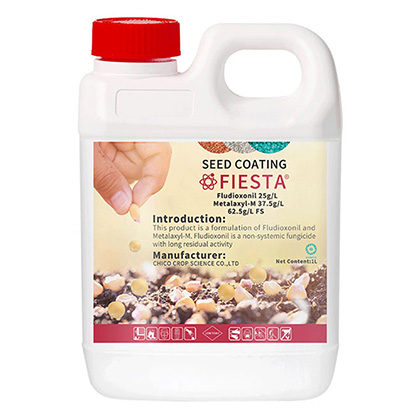
FIESTA® Fludioxonil 25g/L+Metalaxyl-M 37.5g/L FS Seed treatment/ Fungicide
CHICO AMICA® Amino Acid Liquid Organic Fertilizer
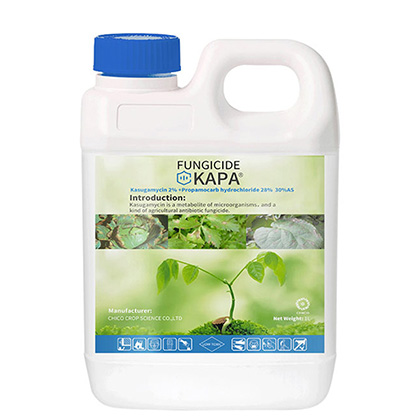
KAPA® Kasugamycin 2%+Propamocarb Hydrochloride 28% 30% AS Fungicide
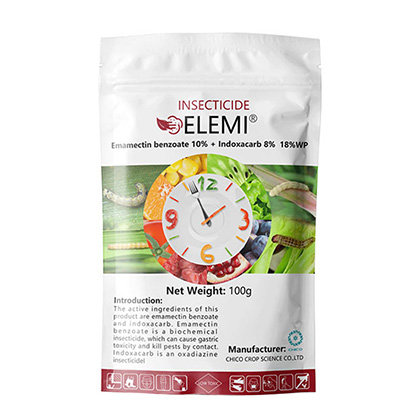
ELEMI® Emamectin Benzoate 5%+ Indoxacarb 15% 20% SC Insecticide
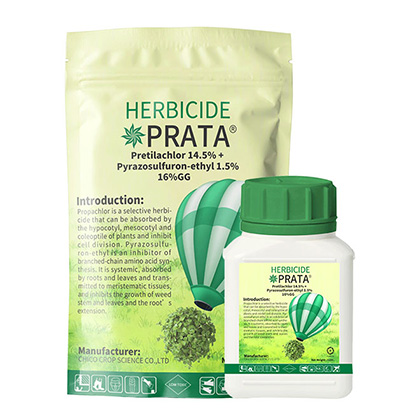
PRATA® Pretilachlor 14.5%+Pyrazosulfuron-ethyl 1.5% 16% GG Herbicide
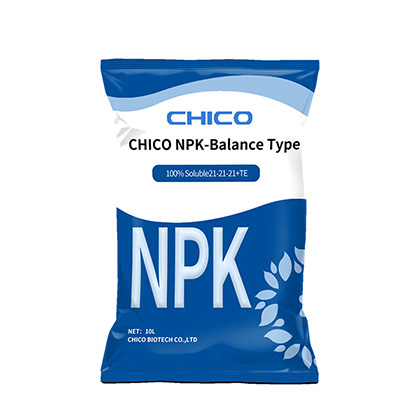
CHICO NPK® Balance Water-soluble Compound Fertilizer
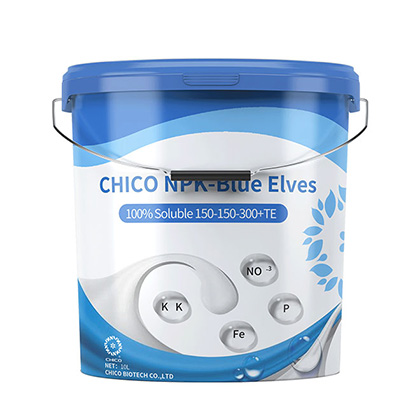
CHICO® Blue Elves NPK Liquid Compound Fertilizer
Other Argo Chemical News
-

-

-

-
 May.20.2022 Company NewsCHICO CROP 9TH ANNIVERSARY!
 -
-