





How to Choose a Biostimulant Supplier: 7 Checks for Importers and Distributors
Oct.18.2026
Table of Content
[Hide]
Choosing a biostimulant supplier is not simply a matter of comparing ingredient names and unit prices. For an importer or distributor, the real decision is whether a manufacturer can deliver a consistent finished product, support local registration, explain the evidence behind its claims, and respond when field conditions do not match the brochure.
Two products can carry similar descriptions and still differ in raw-material control, formulation stability, viable-count specifications, packaging performance, documentation, and application support. A structured supplier review helps reveal those differences before samples become orders and orders become market commitments.
1. Define the Product Identity Before Comparing Prices
Begin with the finished product, not the category name. 'Biostimulant' covers very different technologies, including microbial inoculants, arbuscular mycorrhizal fungi (AMF), amino-acid and peptide formulations, oligosaccharides, organic acids, seaweed-derived materials, and products that also contain plant growth regulators. They cannot be assessed with one generic specification.
For a microbial product, request the microorganism or microbial source, the relevant viable-count or propagule specification, the test method, formulation type, storage conditions, and the point in shelf life at which the specification applies. For a non-microbial product, review the declared composition, concentration, pH, density, solubility or suspensibility where relevant, and any limits for contaminants or insoluble material. The specification should be clear enough to define what an acceptable commercial batch looks like.
2. Examine Formulation Quality, Batch Control, and Stability
A promising active component is only useful if the formulation remains usable through production, shipment, storage, dilution, and application. Ask how incoming raw materials are qualified, which in-process and release tests are performed, how batch-to-batch variation is handled, and whether representative certificates of analysis are available.
Stability information should match the proposed package and expected distribution conditions. A buyer serving hot or humid markets may need more than a standard room-temperature statement. Clarify shelf life, storage limits, packaging compatibility, re-test policy, and the supplier's process for investigating an out-of-specification or damaged shipment.
3. Ask for Field Evidence That Resembles the Intended Use
Field data are most useful when the crop, climate, soil, application route, timing, and commercial objective resemble the buyer's market. A photograph without treatment details is not enough. Request the trial location, crop and variety, treatment rate, timing, number of applications, comparison treatment, plot design, and the measurements used to reach the conclusion.
Strong technical partners are also willing to discuss variability. Biostimulant responses can change with crop stage, baseline fertility, water status, soil conditions, and the existing crop-protection program. Evidence should support a realistic use case, not imply that one result will transfer unchanged to every region.
4. Confirm Registration, Claims, and Documentation Early
Product classification and permitted claims vary by country. The same formulation may follow different regulatory pathways depending on whether it is marketed for nutrient-use efficiency, abiotic-stress tolerance, plant growth regulation, soil improvement, or direct pest and disease control. Before discussing launch dates, confirm the target classification and build a document checklist for that market.
Ask which documents are available, who owns the data, whether documents can be legalized or translated, and which additional studies may be needed. Registration support should include honest identification of dossier gaps, not only a promise that 'documents can be provided.'
5. Use a Seven-Point Supplier Qualification Checklist
The following checklist separates a complete supplier qualification from a price-only comparison.
Check | Evidence to Request | Why It Matters | Warning Sign |
1. Product identity | Finished-product specification and formulation details | Defines exactly what is being purchased | Only a marketing brochure |
2. Quality control | Release tests, test methods, sample COA, batch controls | Supports batch consistency | No acceptance criteria |
3. Stability | Shelf-life, storage, and packaging data | Protects performance through distribution | Generic shelf-life claim only |
4. Field evidence | Crop, location, rate, timing, comparison, and outcomes | Tests relevance to the intended use | Photos without trial context |
5. Registration | Dossier map, document ownership, and gap analysis | Reduces avoidable launch delays | Unclear document availability |
6. Supply fit | MOQ, lead time, capacity, packaging, and change control | Tests commercial reliability | Commitments without production review |
7. Technical service | Application guidance, training, and complaint process | Supports market development after shipment | No technical contact after sale |
6. Evaluate Commercial Support Beyond the Formula
Commercialization can fail even when the formula is sound. Minimum order quantities, production lead time, sample preparation, private-label packaging, artwork review, shipping documents, change control, and complaint handling all affect the real cost and speed of market entry.
CHICO's Services page describes formulation customization, registration support, small-package customization, sample preparation, technical consulting, and after-sales service. Buyers evaluating CHICO should still match those capabilities to a specific product, market, package, and registration plan before confirming an order.
Conclusion
The best biostimulant supplier is not necessarily the company with the longest catalog or the lowest initial quotation. The better choice is the supplier that can define the product clearly, control it consistently, support relevant claims with evidence, identify regulatory gaps, and stay involved after the first shipment.
To discuss a CHICO project, review the biostimulant portfolio and share the target crop, market, formulation, package, and registration requirements through Contact CHICO. That information makes the technical and commercial review more specific from the start.
FAQs
What documents should I request first?
Start with the finished-product specification, technical data, safety documents, representative COA, storage and shelf-life guidance, available field evidence, and a market-specific registration document list.
How should I compare suppliers offering similar ingredients?
Compare the finished formulation, specification limits, test methods, batch controls, stability, evidence quality, supply reliability, and technical service. Ingredient names alone do not establish equivalence.
Does CHICO provide customization and registration support?
CHICO's current Services page lists formulation customization and production, registration support, package and sample customization, technical consulting, and after-sales service. Availability should be confirmed for the exact project.
References
Related Agrochemical Products
BIFOCAL® Bifenazate 25%+Etoxazole 15% 40%SC Insecticide
SUPER ATONIK® Sodium Nitrophenolate 1.8%SL Plant Growth Regulator

PERON® Penoxsulam 20%+ Ethoxysulfuron 10%WG Herbicide
GA PROMOTER® Gibberellic Acid 10%TB, 20%SP Plant Growth Regulator

LUFENCO® Lufenuron 5% + Chlorantraniliprole 5 % SC Insecticide
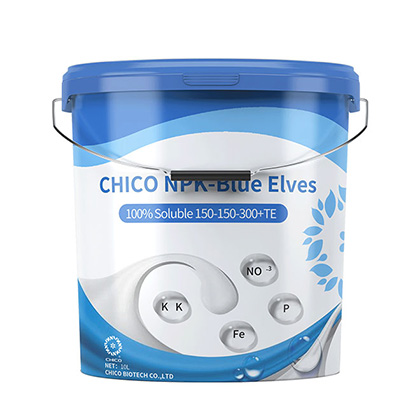
CHICO® Blue Elves NPK Liquid Compound Fertilizer
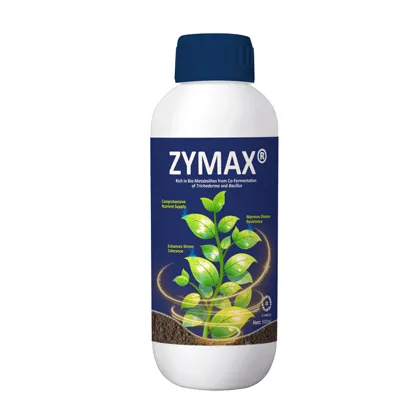
ZYMAX Organic Bio Amino Acid Fertilizer

GLOFOME® Fomesafen 16% + Quizalofop-P-ethyl 6% 22%EC Herbicide
Other Argo Chemical News
-
-

-
-
 Jan.25.2025 BlogFlonicamid Insecticide Uses
 -
-
 Dec.15.2020 Company NewsCHICO Charity Activity - Red Action