



Brassinolide and Bio-Organic Fertilizer: A Practical Guide to Combined Use
Oct.10.2026
Table of Content
[Hide]
Brassinolide and bio-organic inputs can play complementary roles in crop management, but they are not interchangeable and more inputs do not automatically produce a better result. The value of a combined program depends on a clear objective, the finished formulation, crop stage, baseline nutrition, and local application conditions.
The key distinction is simple: brassinolide is a plant growth regulator, while bio-organic formulations may provide peptides, amino acids, organic acids, nutrients, or other biologically active components. One regulates physiological processes; the other may support nutrition or crop vigor. A program makes sense only when the crop needs both functions at the same time.
Separate the Roles Before Combining Them
Brassinosteroids are plant hormones involved in cell expansion, development, photosynthetic responses, and stress signaling. Commercial brassinolide products are used at low concentrations, which makes the exact active concentration and application rate important. They do not supply the nitrogen, phosphorus, potassium, water, or root-zone conditions required for normal crop growth.
Bio-organic fertilizer is a broad commercial term rather than one universal formulation. Depending on the product and market, it may contain organic matter, peptides, amino acids, organic acids, nutrients, microorganisms, or combinations of these. Buyers should evaluate the declared composition and function instead of assuming that all products in this category behave the same way.
Choose the Program Structure That Fits the Objective
Program Option | Primary Role | Best Fit | What Must Be Confirmed |
Brassinolide product | Defined physiological regulation | A specific crop-stage objective | Active concentration, rate, timing, and registration |
Bio-organic input | Nutritional or bioactive support | A documented crop or soil need | Composition, dose, quality, and compatibility |
Integrated formulation | Both functions in one product | Both objectives occur in the same window | Finished-product evidence and label |
Separate products | Independent control of each function | Different rates or application windows are needed | Sequence and tank-mix compatibility |
When Can a Combined Program Be Reasonable?
A combined approach may be considered around transplant establishment, active vegetative growth, flowering and fruit set, or recovery from moderate environmental stress when both physiological regulation and nutritional support are relevant. The exact window must still follow the product label and crop recommendation.
A combined program is less convincing when the main problem is severe water shortage, waterlogging, salinity that has not been managed, major nutrient deficiency, advanced disease, or a poorly diagnosed crop disorder. A growth regulator cannot correct a failed irrigation system, and an organic input cannot replace a registered control measure when direct pest or disease management is required.
Do Not Transfer Rates Between Formulations
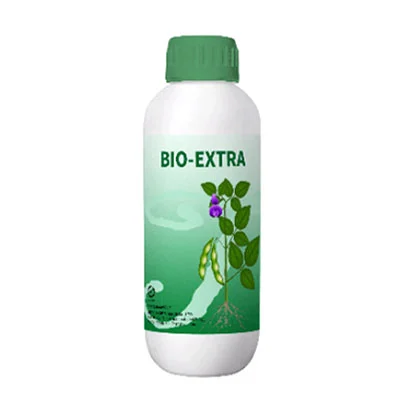
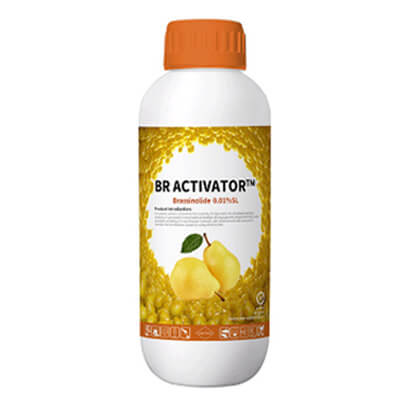
CHICO provides two useful examples of why product identity matters. BR ACTIVATOR® is listed as brassinolide 0.01% SL or 0.01% SP. BIO EXTRA® is listed as a liquid formulation containing 0.0016% brassinolide plus peptides and organic acids. The products have different concentrations and matrices, so their rates and positioning should not be exchanged.
BIO EXTRA® is an example of an integrated formulation designed to combine plant regulation with peptide- and organic-acid-based support. Its current product page says it can be mixed with most pesticides and fertilizers but not with strong acids, strong alkalis, or copper products, and recommends a local trial before large-area use. That guidance belongs to BIO EXTRA® as a finished product, not to brassinolide as an ingredient in general.
Evaluate the Program with a Simple Field Comparison
Where practical, compare the proposed program with the local standard and an untreated or base-nutrition control. Record crop stage, weather, irrigation, baseline fertility, application rate, and timing. Choose measurements that match the objective: transplant survival and new-root activity for establishment; canopy growth for vegetative development; flower retention and fruit set for reproduction; or yield and quality at harvest.
This comparison helps determine whether the integrated approach adds value, whether separate timings would be better, and whether the result is consistent enough for commercial recommendation.
Conclusion
Brassinolide and bio-organic fertilizer can complement each other when both functions are needed in the same crop window. The decision should come from the agronomic objective, not from the assumption that stacking inputs creates automatic synergy.
To compare BR ACTIVATOR® and BIO EXTRA® for a target crop, contact CHICO with the crop stage, existing nutrition program, application route, and intended outcome.
FAQs
Is brassinolide a fertilizer?
No. Brassinolide is a plant growth regulator. A commercial formulation may also contain nutritional or organic components, but brassinolide itself does not replace a fertilizer program.
Can the same dose be used for every brassinolide product?
No. Active concentration, formulation, crop, application route, and registration differ. Use the rate for the exact finished product and local label.
Does combining brassinolide with a bio-organic input guarantee synergy?
No. Complementary functions are possible, but the result depends on formulation, timing, crop condition, and environment. Product-specific evidence and a local comparison are more reliable than a generic synergy claim.
References
Related Agrochemical Products
KAPA® Kasugamycin 2%+Propamocarb Hydrochloride 28% 30% AS Fungicide
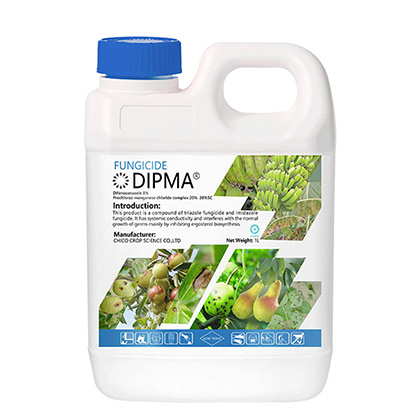
DIPMA® Difenoconazole 8%+Prochloraz-manganese Chloride Complex 20% 28% SC Fungicide
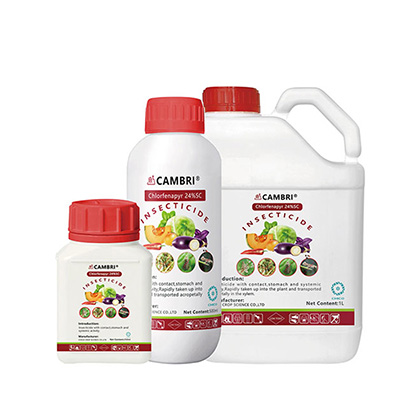
CAMBRI® Chlorfenapyr 24%SC Insecticide
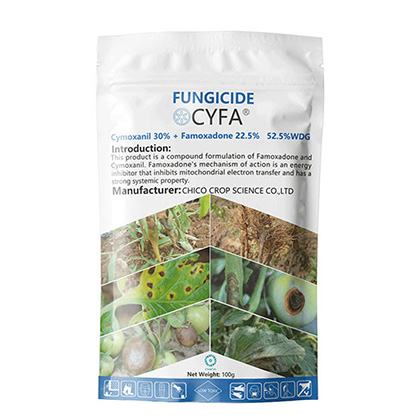
CYFA® Cymoxanil 30%+Famoxadone 22.5% 52.5% WDG Fungicide

BLINK® Bifenthrin 18% + Dinotefuran 12% SC Insecticide

CHOABS® Choline chloride 19.9% + (+)-Abscisic acid 0.1% SL plant growth regulator
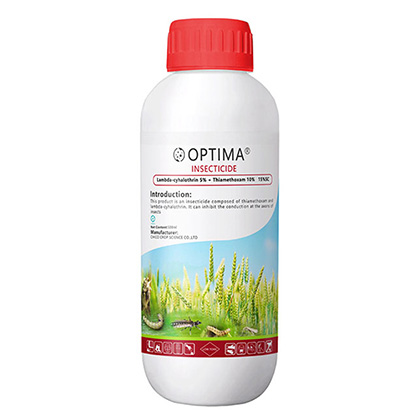
OPTIMA® Lambda-cyhalothrin 5%+Thiamethoxam 10% 15%SC Insecticide

MAXIUM Methoxyfenozide 24 % SC Insecticide