



Chitosan for Nematode Management: Key Formulation and Application Factors
Sep.24.2026
Table of Content
[Hide]
Chitosan is used in agriculture as a bioactive polymer and elicitor, but the ingredient name alone does not predict field performance. Molecular weight, degree of deacetylation, concentration, solubility, pH, application route, crop, and formulation partners can all change the response.
This matters when chitosan is positioned in root-knot nematode and root-zone programs. Research has reported direct and indirect effects under some laboratory, greenhouse, and field conditions, including effects on nematode activity, rhizosphere interactions, plant defense responses, and crop growth. Those findings are context-dependent and should not be converted into a universal control claim for every chitosan product.
What Chitosan May Contribute
Plants can recognize chitin- and chitosan-related molecules as signals and activate defense-associated responses. Depending on the crop and formulation, chitosan may also influence root growth, microbial interactions, cell-wall-related processes, and stress responses. Direct activity against nematodes has been observed in some experimental systems, but results vary with molecular characteristics and exposure conditions.
For commercial positioning, distinguish three possible roles: an elicitor or plant-support role; a formulation component that improves delivery or stability; and a direct nematode-control role supported by product-specific evidence and appropriate registration. One role should not be used as proof of another.
Evaluate the Finished Formulation, Not Just 'Chitosan 2%'
Formulation Question | Why It Matters | Evidence to Request | Risk if Unclear |
What is the chitosan concentration and form? | Sets the active level and handling characteristics | Specification and analytical method | Non-equivalent products appear identical |
What molecular characteristics are controlled? | Molecular weight and deacetylation can affect solubility and biological behavior | Raw-material specification and change control | Variable field response |
What is the pH and solubility profile? | Affects dilution, tank behavior, and crop safety | Physical-chemical data and mixing guidance | Precipitation or uneven delivery |
What other active components are present? | Partners may add direct activity or change stability | Full composition, rationale, and compatibility data | Chitosan receives credit for the whole formula |
Which crop, route, and target were tested? | Performance is use-pattern specific | Trial design, rate, timing, comparison, and outcomes | Unsupported transfer across crops |
Application Route Changes the Evaluation
For nematode management, delivery to the active root zone is usually central. A soil drench or drip application should be evaluated for movement in the irrigation system, root-zone distribution, soil moisture, pH, and contact time. A transplant or seedling use also requires a crop-safety check because young roots can be sensitive to concentration and placement.
Foliar application may be relevant for plant-response objectives, but it should not be assumed to provide the same root-zone exposure as a drench. The application route must match the claimed function and the evidence package.
The NEMAFORCE® Formulation Example
NEMAFORCE® is listed by CHICO as metabolites of Bacillus nematocida plus chitosan 2% AS. The formulation is designed around two complementary components: microbial metabolites positioned for direct nematode activity, and chitosan positioned for plant-defense and root-support functions.
The formulation should be evaluated as a whole. Evidence for the metabolites, evidence for chitosan, and evidence for the finished combination answer different questions. Without a comparative trial, it is safer to describe the roles as complementary design intent rather than guaranteed synergy.
Questions Distributors Should Ask Before Registration
• Which specification is controlled for chitosan and the microbial metabolites?
• What shelf-life and packaging data support the proposed market conditions?
• Which nematode species, crop, rate, timing, and application route were tested?
• Does the evidence measure mortality, egg hatch, population density, root galling, crop response, or several endpoints?
• Which claims are permitted under the target country's fertilizer, biostimulant, plant-regulator, or pesticide rules?
• Which products or water conditions are incompatible, and what local trial is recommended?
Conclusion
Chitosan can be a valuable component of nematode and root-zone formulations, but its commercial value depends on controlled material properties, appropriate delivery, realistic claims, and evidence from the finished product. Buyers should evaluate the formulation and use pattern, not purchase the ingredient name alone.
For NEMAFORCE® composition, application guidance, and registration documents, contact CHICO with the intended crop, target nematode, country, and application system.
FAQs
Is chitosan a fertilizer?
Chitosan is not a primary source of N-P-K. Its regulatory category and permitted claims depend on the product composition, intended function, and market.
Can chitosan replace a registered nematicide?
That should not be assumed. Direct control depends on the finished product's evidence and registration. Chitosan may be used as one component of an integrated program when its role is clearly defined.
Why combine chitosan with microbial metabolites?
The formulation can pair different functions, such as metabolite-based nematode activity and plant or root support. A finished-product comparison is needed before claiming a proven synergistic effect.
References
Related Agrochemical Products
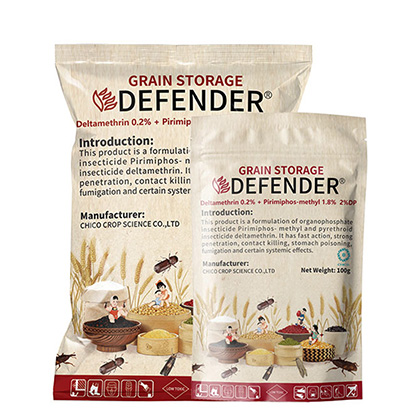
DEFENDER® Deltamethrin 0.2%+Pirimiphos-methyl 1.8% 2% DP Insecticide

GLOFOME® Fomesafen 16% + Quizalofop-P-ethyl 6% 22%EC Herbicide
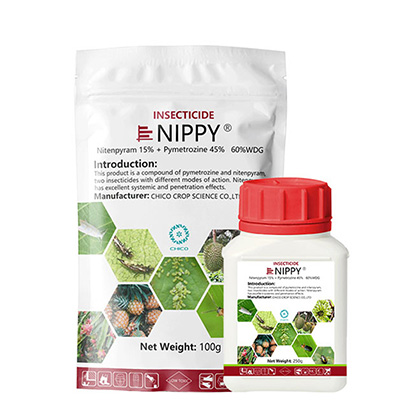
NIPPY® Nitenpyram 20%+Pymetrozine 60% 80%WP Insecticide

VIHITOR® Moroxydine hydrochloride 10 % + Copper acetate 10 % WP Fungicide
CHICO AMICA® Amino Acid Liquid Organic Fertilizer
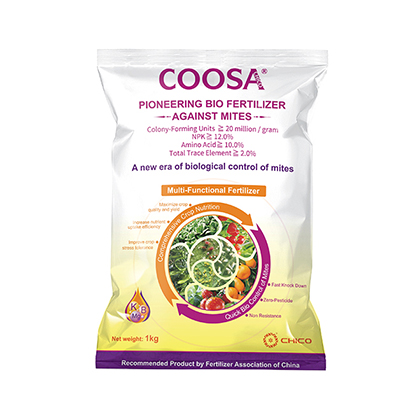
COOSA® -Bio Amino Acid Fertilizer Against Mites

DITO® Dinotefuran 10% + Tolfenpyrad 15% SC Insecticide
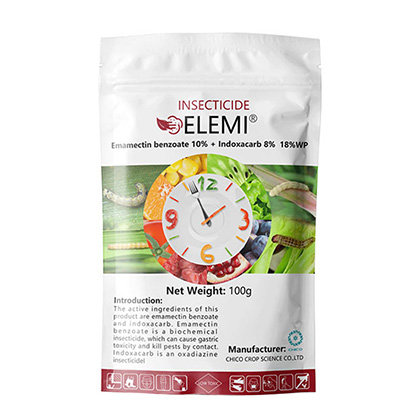
ELEMI® Emamectin Benzoate 5%+ Indoxacarb 15% 20% SC Insecticide
Other Argo Chemical News
-
-

-
-
-
 Apr.26.2022 Company NewsDing-Dong! Your New COOSA® is Arrived!
 -
